Local Remodeling Experts Orland Park
To get remodeling excellence in Orland Park, demand a documented scope, code checks against village and county rules, and line‑item pricing tied to permits and inspections. Lock specs early (SKUs, finishes, mechanicals) for accurate takeoffs and sequencing. Verify licenses, insurance, and inspection history; scrutinize BBB, litigation, and recent client references. Require GFCI/AFCI, ventilation calcs, moisture‑rated substrates, and kiln‑dried lumber. Track budget-to-actuals weekly and document change orders. You’ll see how top pros protect schedule, cost, and quality next.
Key Takeaways
- Confirm licensing, permits, and insurance for Orland Park; check BBB ratings, legal record, and latest inspection approvals before making a hiring decision.
- Insist on transparent project estimates that include detailed costs for labor, materials, and allowances, backup provisions, and well-defined payment schedules connected to quality checks.
- Verify building code requirements including ventilation systems, load paths, GFCI/AFCI safety, emergency exits, fire barriers, and Cook County zoning requirements.
- Lock specifications early (SKUs, finishes, mechanicals) to facilitate precise planning, consistent budgeting, and timely ordering.
- Concentrate on home value by installing energy-efficient appliances, LED light fixtures, accessible bathroom designs, enhanced insulation, and comprehensive surge protection.
Distinguished Features of Premier Orland Park Remodelers
Begin with established methods and regional knowledge. You deserve a contractor who documents scope, checks zoning, acquires permits, and coordinates inspections without delays. Premier Orland Park remodelers assess load paths, determine ventilation, and specify GFCI/AFCI protection where required. They measure twice, model conditions, and coordinate trades to ensure clearances, fire blocking, and egress.
Their expertise becomes evident in their strategic sequencing of demolition, remediation, and construction phases to safeguard adjacent surfaces and systems. They follow strict quality control measures: water-resistant materials in moisture zones, kiln‑dried lumber, environmentally safe coatings, and code-compliant fasteners and connectors. They provide thorough paperwork with submittal logs, product specifications, and delivery verification against specifications. They finalize work with detailed project documentation, warranty certificates, and built drawings, confirming your remodel functions effectively while meeting safety standards and building codes.
Strategic Planning and Straightforward Pricing Approaches
From pre-design through closeout, smart planning and transparent pricing keep your Orland Park renovation project on track, within budget, and meeting all regulations. You start with a clear scope, a code check against Orland Park and Cook County regulations, and a milestone schedule aligned with permits, inspections, and lead times. You organize specifications early-SKUs, finishes, mechanicals-so takeoffs are precise and supply chain is optimized.
Implement sequential estimates to verify costs at key project milestones. Allocate funds through phased budgeting for funds to individual work packages-demolition, structural work, mechanical systems, finishing touches-so you observe variances in real time. Request detailed labor, materials, allowances, and contingencies, plus unit pricing for changes. Secure long-lead items with down payments, specify inclusions/exclusions, and establish payment triggers by milestone completion or verification, not calendar dates.
Vetting Contractors: Essential Steps for Verification
Prior to requesting bids, be sure to verify each contractor's legal standing and track record in Orland Park and Cook County. Commence with validating credentials through the Illinois Department of Financial and Professional Regulation and the Village of Orland Park's permitting records. Verify they maintain current insurance coverage and workers' comp; obtain documentation listing you as the certificate holder. Check their Better Business Bureau status, legal record, and issues linked to their construction permits.
Review testimonials on multiple platforms like Google, Houzz, and GuildQuality, paying attention to code compliance, inspection results, schedule adherence, and how changes are processed. Carry out background verification with a minimum of three current customers and a single project from more than three years ago. Request final inspection documents and finished project images. Inspect a current work location to review site cleanliness, safety protocols, management of subcontractors, and visible licensing.
Aligning Vision, Budget, and Timeline for Success
Whether you're planning a kitchen update or increasing your home's footprint, you need a detailed scope that connects design goals to a realistic budget and workable schedule. Specify design requirements in writing: room dimensions, finish specifications, appliance details, fixture specifications, and building code clearances. Establish an allowance framework for cabinets, tile, light fixtures, and unexpected costs, then confirm lead times to protect the critical path.
Align schedules with numbers. Require a master timeline with critical points: permitting process, rough-in work, required inspections, drywall completion, and punch list. Apply phased scheduling when utility changes or material delays impact workflow. Lock subcontractor commitments and confirm permitting timeline with Orland Park officials.
Hold weekly performance evaluations against actual versus budgeted costs and schedule variance. Log scope changes without delay, specifying scope, financial implications, and timeline extensions, before work proceeds.
Popular Features Improving Comfort, Functionality, and Property Value
As building standards advance and buyer demands increase in Orland Park, you can target improvements that boost daily functionality while increasing appraisal value. Begin with a high-impact kitchen: select Energy Star-rated, eco-friendly appliances, induction cooking, and low-flow, code-compliant fixtures. In bath spaces, integrate zero-threshold showers, support for accessibility elements, and lever handles to enhance universal design without diminishing style.
Boost comfort levels and efficiency with improved insulation, weatherization, and a right-sized HVAC with advanced zoning systems and smart temperature controls. Install LED lighting, tamper‑resistant receptacles, GFCI/AFCI protection, and comprehensive surge protection to satisfy current electrical standards. Optimize storage with fully extending drawers, mudroom drop zones, and tailored closet organizations. On the outside, evaluate engineered deck materials, premium windows, and energy-saving garage doors to maximize home efficiency and visual appeal.
Questions and Answers
How Do Home Remodels Affect Insurance Coverage and Premiums
Home renovations can change your dwelling's rebuilding cost, which means your insurance provider could need to modify your insurance coverage and rates. You'll likely need insurance adjustments or endorsements to account for expanded floor area, modernized utilities, or premium finishes. Inform your insurer before renovations commence; they typically require building permits, licensed contractors, and upgrades meeting building codes. Track costs and materials, review and adjust insurance limits, and secure builder's risk protection during renovation. Once finished, get a new appraisal to verify adequate dwelling coverage, building code coverage, and liability insurance.
What Permits Are Homeowners Responsible for Versus the Contractor?
You generally manage zoning approvals, HOA consent, and utility notifications; your builder obtains construction permits, specialized trade licenses (electrical, plumbing, HVAC) and schedules inspections. However, review your agreement: authorities often treat you as the responsible party if permits lapse. You must sign all applications, handle necessary fee payments, and provide site plans. The contractor needs to provide approved blueprints, follow code, display permits at the location, follow safety guidelines, and complete final permit inspections prior to occupancy.
How Can I Live Safely During Major Home Renovations?
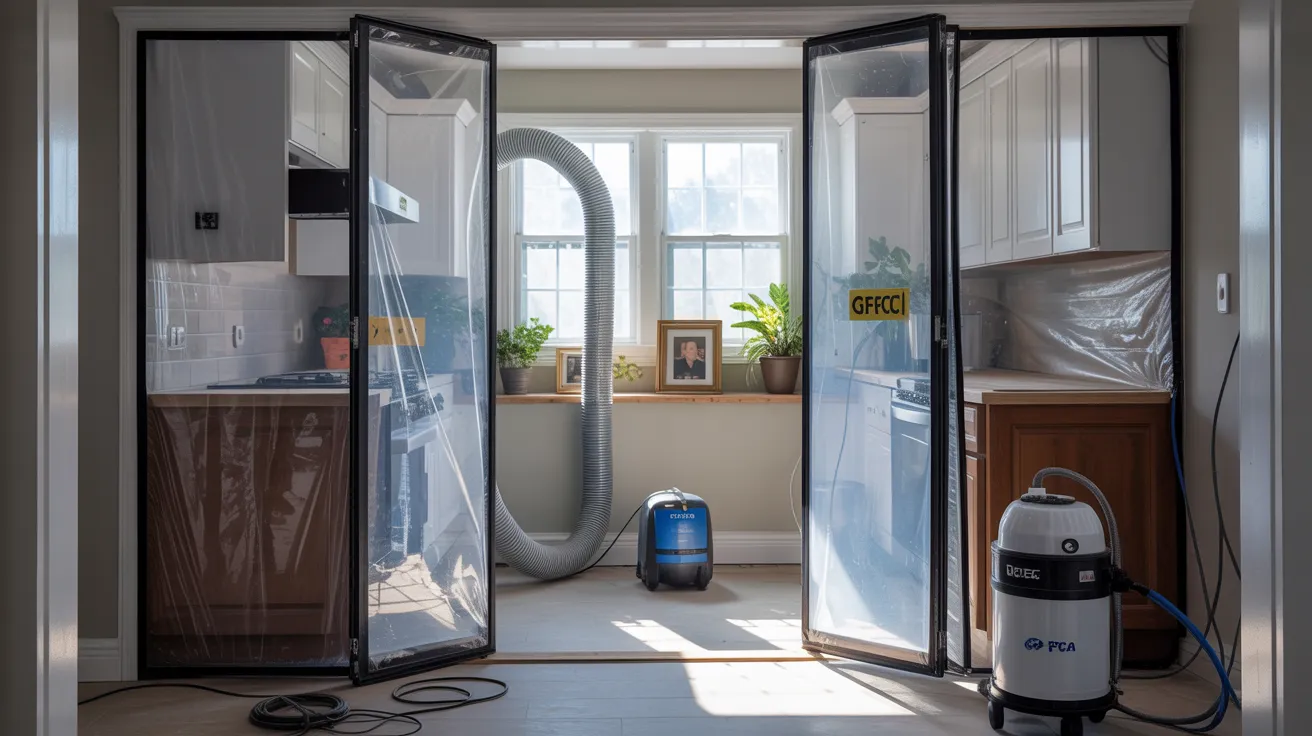
Living safely onsite is possible by segregating construction areas with protective barriers and negative air units, setting up a provisional cooking area with protected outlets, and maintaining clear egress paths as required by regulations. Establish noise reduction protocols with designated silent periods and sound masking equipment. Implement dust prevention (HEPA filtration, boot covers), daily cleanup, and MERV-13 filters. Confirm CO/smoke detectors, cap utilities safely, and lockout panels. Prevent entry of children and pets, display safety notices, and arrange safety checks before reoccupying areas.
What Warranties Cover Post-Project Materials and Workmanship
You typically get two types of protection: a Workmanship assurance and a Material warranty. The Workmanship guarantee protects against labor defects-like misaligned setups, improper sealing-usually 1-5 years, connected to code-compliant practices and fix implementations. The Material warranty is provided by manufacturers-covering fixtures, roofing, windows-extending 5-30+ years, covering defects, not normal usage or misuse. Looking for security if concerns arise? Keep signed scope, specs, serials, and maintenance logs; request transferable warranties and written claim protocols with specified response times.
What's the Process for Documenting Change Orders to Avoid Disputes
You document change orders by creating a formally executed amendment that links back to the original contract. You specify scope changes point by point, attach drawings/specs, and update quantities, materials, and schedule impacts. You include detailed pricing or fixed sum, detail labor/equipment rates, and determine approval dates. You handle cost tracking read more via numbered change order logs, updated budgets, and real-time time-and-materials tickets. You maintain emails, meeting minutes, and photos to create a thorough record.
Wrapping Up
You've observed what sets apart top-tier Orland Park remodelers: they consistently deliver strategic preparation, transparent pricing, and regulation-adherent performance. You define goals, validate licenses and reviews, and require written specifications for scope, schedule, and specs. You harmonize vision, budget, and timeline; they provide expert workmanship, regulatory adherence, and professional responsibility. Choose materials that last, systems that conserve, and layouts that work efficiently. Should you thoroughly vet, agreement clearly, and monitor phases, you'll safeguard your investment, elevate comfort, and optimize resale value-without unexpected issues.